bling ai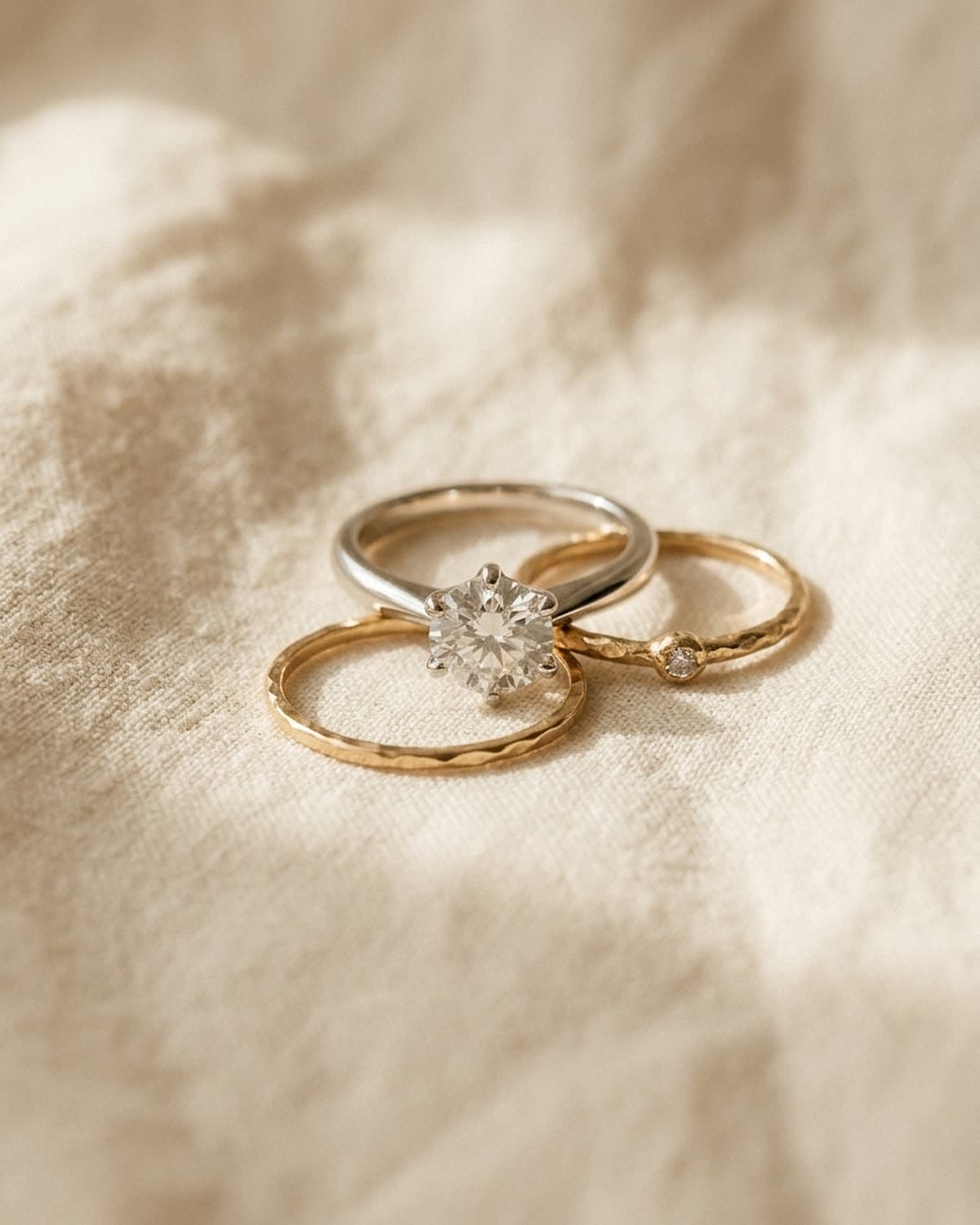
search "where to sell jewelry online" and you get the same list twelve times — etsy, shopify, amazon, ebay, instagram, and a scroll of names nobody has ever bought from. the list isn't the hard part. choosing is.
the useful question is narrower: what are you selling, at what price, to whom. that decides the venue, and the venue decides your economics for as long as you sell there. a $60 pair of handmade studs and a $4,000 estate ring do not belong in the same place, and no amount of good marketing fixes putting them there.
here's what each channel actually costs an independent jeweler, who each one genuinely suits, and the honest downside nobody puts in the listicle.
start with what you sell
four rough buckets. find yours before you read anything else, because it eliminates most of the list for you.
- handmade, made-to-order, under ~$300 → a browse marketplace for discovery, plus your own store. etsy and amazon handmade are built for you.
- fine jewelry, $500 and up → your own store first. marketplace percentages get punishing at this price, and the trust problem is solved by your own brand, not by a category page.
- vintage, estate, signed, one-of-a-kind → ebay and the specialist venues, where buyers search by maker, era and hallmark rather than browsing a category.
- fashion and demi-fine, trend-led → tiktok shop and instagram, where the content is the storefront.
most sellers sit cleanly in one bucket and try to sell in all four. that's the mistake this guide exists to prevent.
the marketplaces
marketplaces sell you one thing: people who are already shopping. you pay for that in percentage, and you pay for it forever.
etsy
the default for handmade, and still the fastest route to a first sale from a stranger.
- $0.20 per listing, good for four months
- 6.5% transaction fee, charged on the total including what you charge for shipping
- ~3% + $0.25 payment processing in the us
- offsite ads at 12–15% of the order when a sale comes through one — and this becomes mandatory once your shop passes $10,000 in a rolling 365 days
on a plain $100 sale that's roughly $9.95, or about 10%. through an offsite ad it lands nearer 20%.
suits: handmade and personalised pieces under about $300, sellers who need traffic on day one and don't yet have an audience.
the honest downside: you are renting the customer. etsy owns the relationship, the search results, and increasingly the ad spend. the 6.5% on shipping quietly punishes anyone who ships heavy or free. and once you cross $10k, that offsite ads fee is not a choice.
we have a full etsy listing walkthrough if that's your channel, and a page for etsy sellers.
amazon handmade
- 15% referral fee on the total, with a $1.00 minimum on jewelry
- no listing fees
- the $39.99/month professional selling plan fee is waived for approved handmade sellers
suits: pieces that sell on specification rather than story — a birthstone pendant somebody is actively searching for. you inherit prime buyers and enormous search volume.
the honest downside: 15% flat is steep on thin margins, entry requires an application, and an amazon product page gives you almost no room to be a brand. you are a listing among listings.
ebay
still the deepest buyer pool for anything old, odd, or valued by weight.
- ~15% final value fee on jewelry and watches under $5,000
- plus $0.40 per order ($0.30 on orders of $10 or less)
- 250 free listings a month without a store subscription
suits: vintage, estate, signed pieces, scrap and gold-by-weight, and anything where the buyer is searching a specific maker or hallmark. auction format genuinely finds market price on pieces you can't confidently price yourself.
the honest downside: 15% is at the top of the range, and the platform's aesthetic does nothing for a contemporary brand.
see the page for vintage + estate sellers.
your own store
your own store sells you the opposite thing: ownership. the customer, the list, the margin, the brand. what it does not give you is a single visitor.
shopify
- basic $39/month (about $29 billed annually), grow $105, advanced $399
- shopify payments at roughly 2.9% + $0.30 on basic, dropping on higher plans
- using an outside payment gateway adds a 0.6–2% surcharge on top
on that same $100 sale you keep about $96.80 instead of etsy's $90. across a year that gap is real money — but only if you can put people in front of the product.
the alternatives: squarespace and wix are cheaper and simpler with weaker commerce tooling; big cartel has a free tier and suits very small catalogs. any of them beat no store at all.
see the page for shopify jewelry stores.
social commerce
tiktok shop
the cheapest headline rate of any marketplace on this page.
- 6% referral fee in the us, and 5% on certain fine jewelry sub-categories — diamond, gold, jade, platinum/carat gold, and ruby/sapphire/emerald
- that single fee covers commission and payment processing, with no separate transaction cut
- new sellers get a promotional 3% for their first 30 days
suits: demi-fine and fashion pieces with a strong visual hook, and anyone willing to post consistently.
the honest downside: the low fee is not the real price. tiktok shop is a content channel with a checkout bolted on — it pays out to sellers who make video daily, and returns almost nothing to sellers who list and wait. affiliate commissions you set and any ad spend stack on top of that 5–6%.
instagram and facebook
treat these as discovery, not checkout. the reliable pattern now is a strong grid, saveable content, and a link to your own store or a dm conversation. that suits custom work, permanent jewelry, and local trade far better than it suits catalog volume — those sales close in conversation, not in a cart.
see the page for instagram jewelers.
not a marketplace at all — a search engine that happens to be visual. a pin keeps returning traffic for months after posting, which is the opposite of every other social platform. worth it purely as a feed into your own store.
wholesale
faire
selling to shops instead of people, which changes the whole shape of the business.
- 15% commission on orders from retailers who find you through the marketplace
- plus a $10 new-customer fee on that retailer's first order only
- 0% commission on faire direct orders — accounts you bring yourself — where you pay only 1.9–3.5% processing
suits: makers who can produce repeatably at wholesale margin. you need enough headroom to sell at roughly half your retail price and still profit, so this only works if your pricing was built for it from the start.
the honest upside nobody mentions: one good stockist reorders. a hundred one-off retail customers do not.
specialist and resale
- 1stdibs — for genuinely high-end antique and designer work. subscription plus commission, with plans running from around $99/month at 23% commission on the first $25,000 up to $550/month at 17%. the audience is buying at a level that justifies it.
- ruby lane — a curated antiques and vintage audience with a monthly shop fee. smaller than ebay, but the buyers arrive knowing what they're looking at. check current rates directly, they've moved recently.
- depop — 0% seller fee in the us, about 3.3% + $0.45 processing. young, fashion-led, resale-native.
- poshmark — a flat $2.95 under $15, and 20% at $15 and above. that 20% is the highest number on this page; it buys you a genuinely social selling audience.
the fee math, side by side
what each channel takes from a $100 sale, and what you're actually buying with it.
| channel | roughly takes | what the fee buys you |
|---|---|---|
| your own store (shopify) | $3.20 + monthly plan | nothing. you supply the traffic, you keep the customer |
| tiktok shop (fine jewelry) | $5.00 | a feed, if you feed it |
| tiktok shop (standard) | $6.00 | same, at the general rate |
| etsy | $9.95 | browse traffic and a buyer who already trusts the checkout |
| etsy via offsite ads | up to ~$20 | the same buyer, found by etsy paying to advertise you |
| amazon handmade | $15.00 | prime buyers and search volume, no brand surface |
| ebay (jewelry) | ~$15.40 | the deepest pool for vintage, estate and weight |
| faire (new stockist) | ~$25 first order | a wholesale account that reorders at 15% after |
| poshmark | $20.00 | a social resale audience |
read that table as cost-per-customer, not cost-per-sale. etsy's $9.95 is expensive if the buyer comes back to you directly next time, and cheap if they never would have found you at all.
how to actually choose
the answer for almost every independent jeweler is two channels, not six:
- one marketplace that matches your bucket — etsy for handmade, ebay for estate, tiktok for trend-led. this is where discovery happens while nobody knows your name yet.
- one storefront you own. it can be quiet at first. it is where the margin lives, and where every repeat buyer should end up.
then move people from the first to the second, deliberately, over years. a card in the parcel, an email list, a reason to come direct.
what doesn't work is adding a sixth channel because a blog post listed it. every additional channel is another set of photographs, another copy format, another inventory sync and another inbox. channels don't add sales on their own — they add work, and only sometimes sales.
nobody has ever bought a piece because of the platform it was listed on. they bought it because the first photo made them stop.
the one thing every channel needs
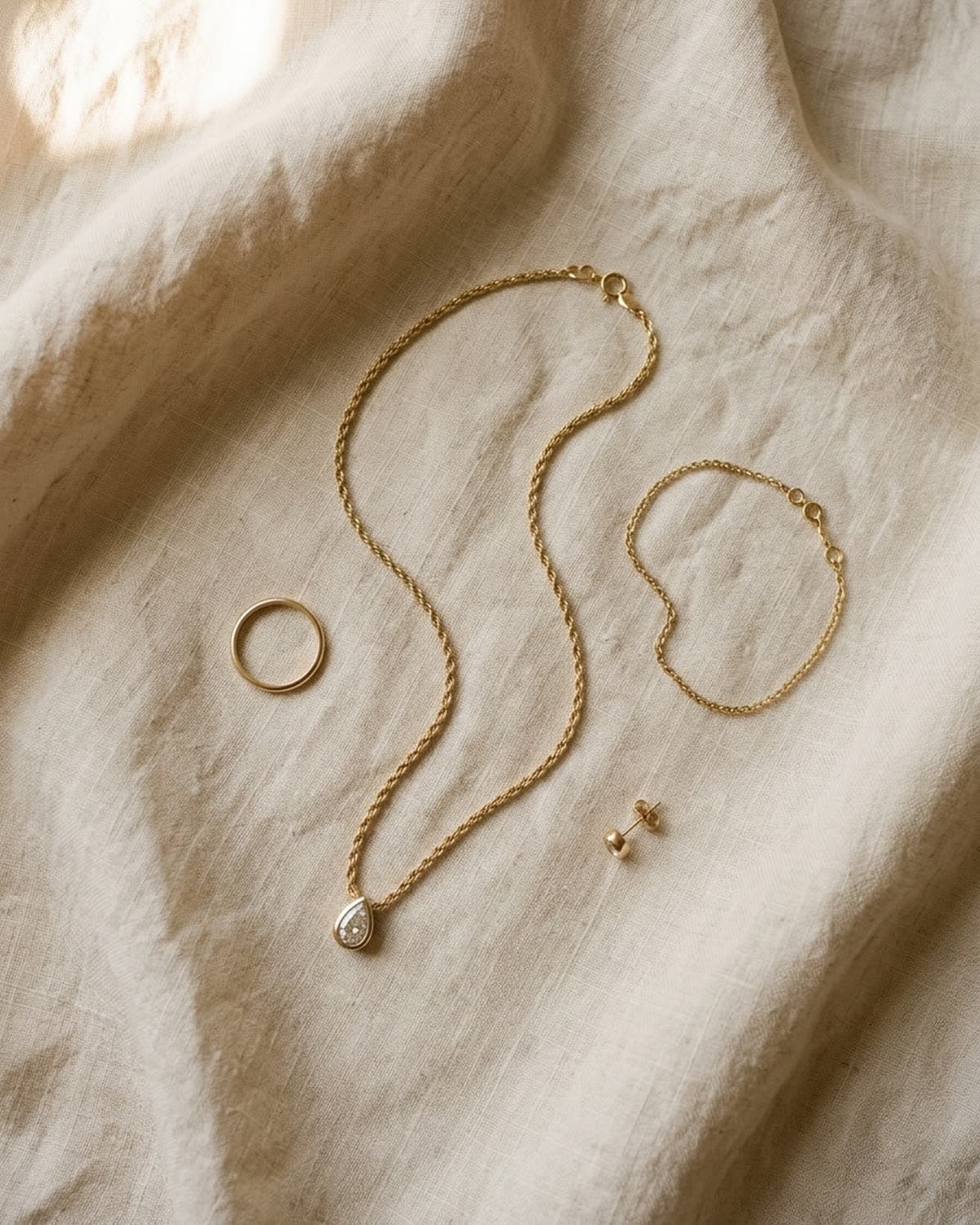
look back at that list. etsy, amazon, ebay, tiktok, instagram, faire, your own store. every single one is a grid of photographs with a price underneath.
the fees differ. the requirement does not: a thumbnail that stops a scroll, and a handful of supporting shots that answer the questions a buyer can't ask. etsy gives you twenty photo slots and two videos. tiktok needs motion. faire needs your piece to look like something a buyer would stock. wholesale, retail, resale — all of it is decided on the image before anyone reads a word.
this is where most sellers actually stall. not on choosing a platform — on having the pictures to fill one properly. if that's the bottleneck, start here:
- how to photograph jewelry with your phone — the three settings that matter
- what jewelry product photography costs in 2026 — studio, freelance, diy and ai, with the real math
- jewelry photo size requirements — the sizes, shapes and background rules for every platform on this page
- per-piece guides for rings, earrings, necklaces and bracelets
the shortcut
the reason multi-channel selling is exhausting isn't the channels. it's that each one wants its own images, in its own shape, and shooting them is the part that never gets faster.
bling ai turns one phone photo of a piece into campaign-ready stills and video — enough to fill an etsy listing, a shopify page, and a week of social, from the same source shot. rights included, commercial use allowed, unlimited pieces. it's free to start, with 100 credits and no card needed, so you can run something from your own inventory through it before deciding anything.
start creating for free, get the iphone app, or see the showcase — every image in there began as a single phone photo.