bling ai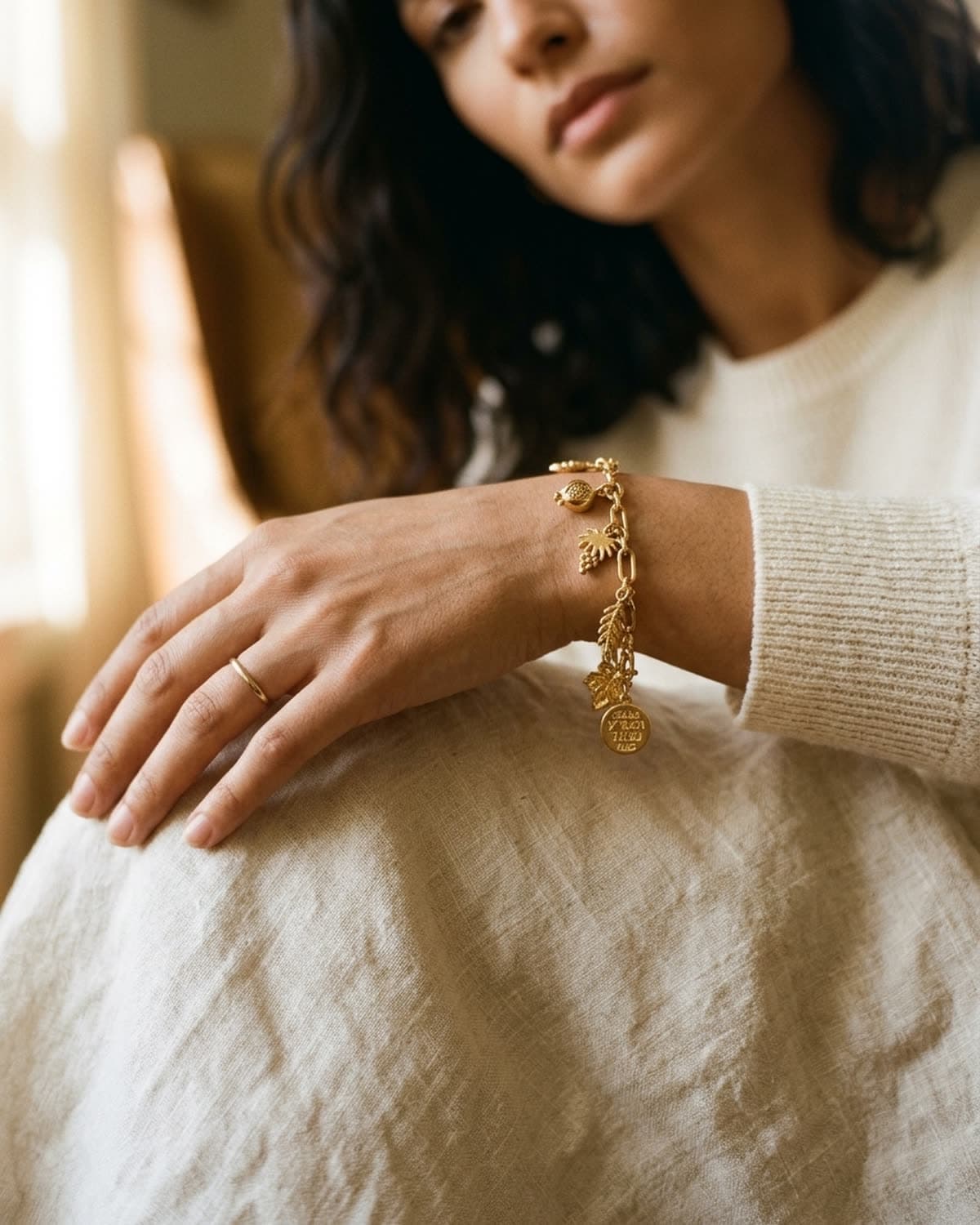
a bracelet is built to wrap a wrist, and the moment you take it off one and set it flat, it stops making sense. a chain bracelet puddles. a bangle becomes a plain circle. a cuff lies on its side like it fell over. the shape that makes a bracelet desirable — the curve — is the first thing a flat surface takes away.
so bracelet photography is mostly a problem of giving the curve back. either you put it on a wrist, or you coil it so it implies one. everything else is the same warm-window, off-center setup you'd use for any piece.
here's how to do both, the clasp problem nobody mentions, and the iphone settings that keep a polished bangle from blowing out.
the setup
window, neutral surface, six to twelve inches from the edge — unchanged. the bracelet-specific decision is made before you shoot a single frame: wrist or coil.
the wrist sells the bracelet. the coil sells the metal. shoot both if the piece matters, and lead your listing with the wrist.
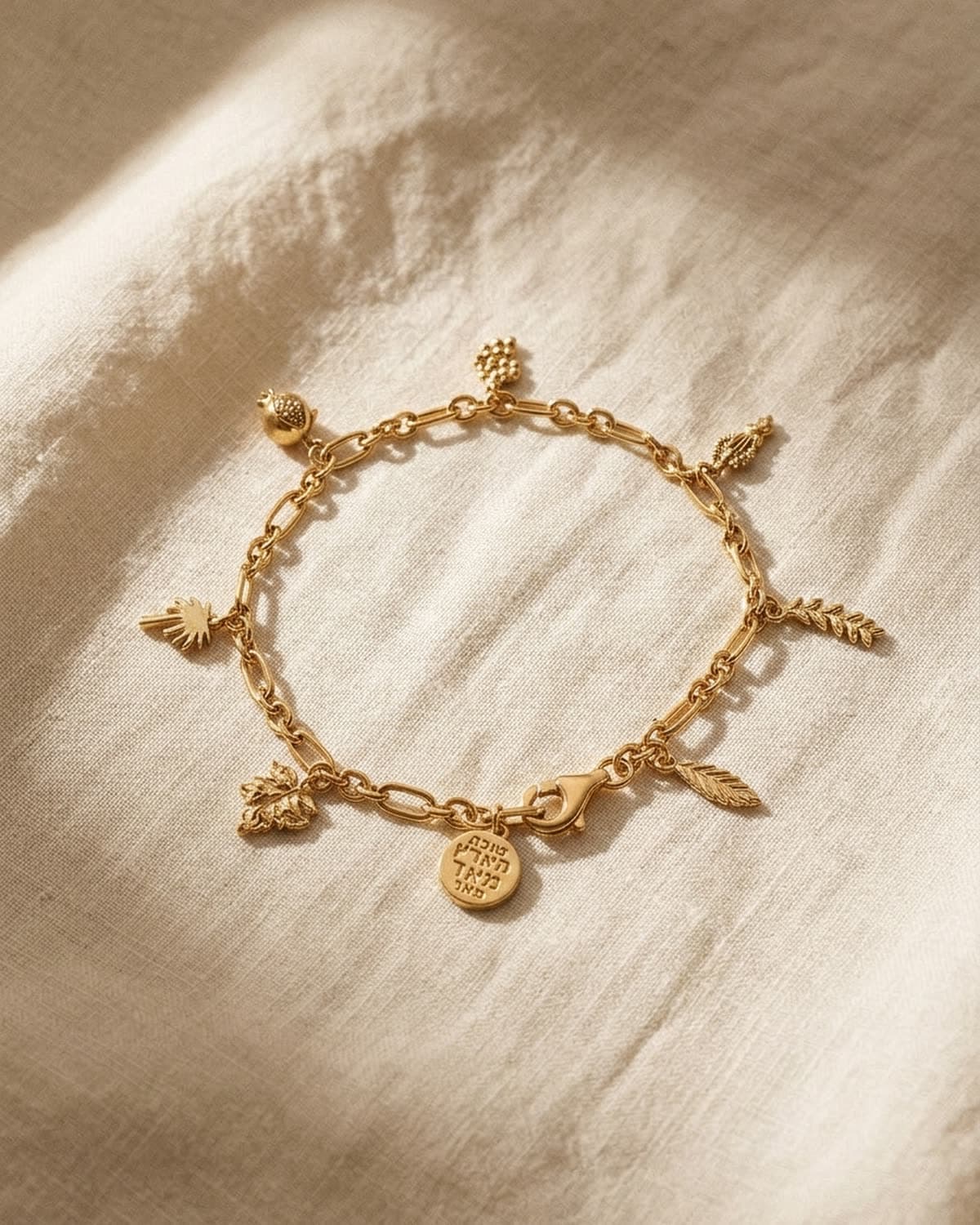
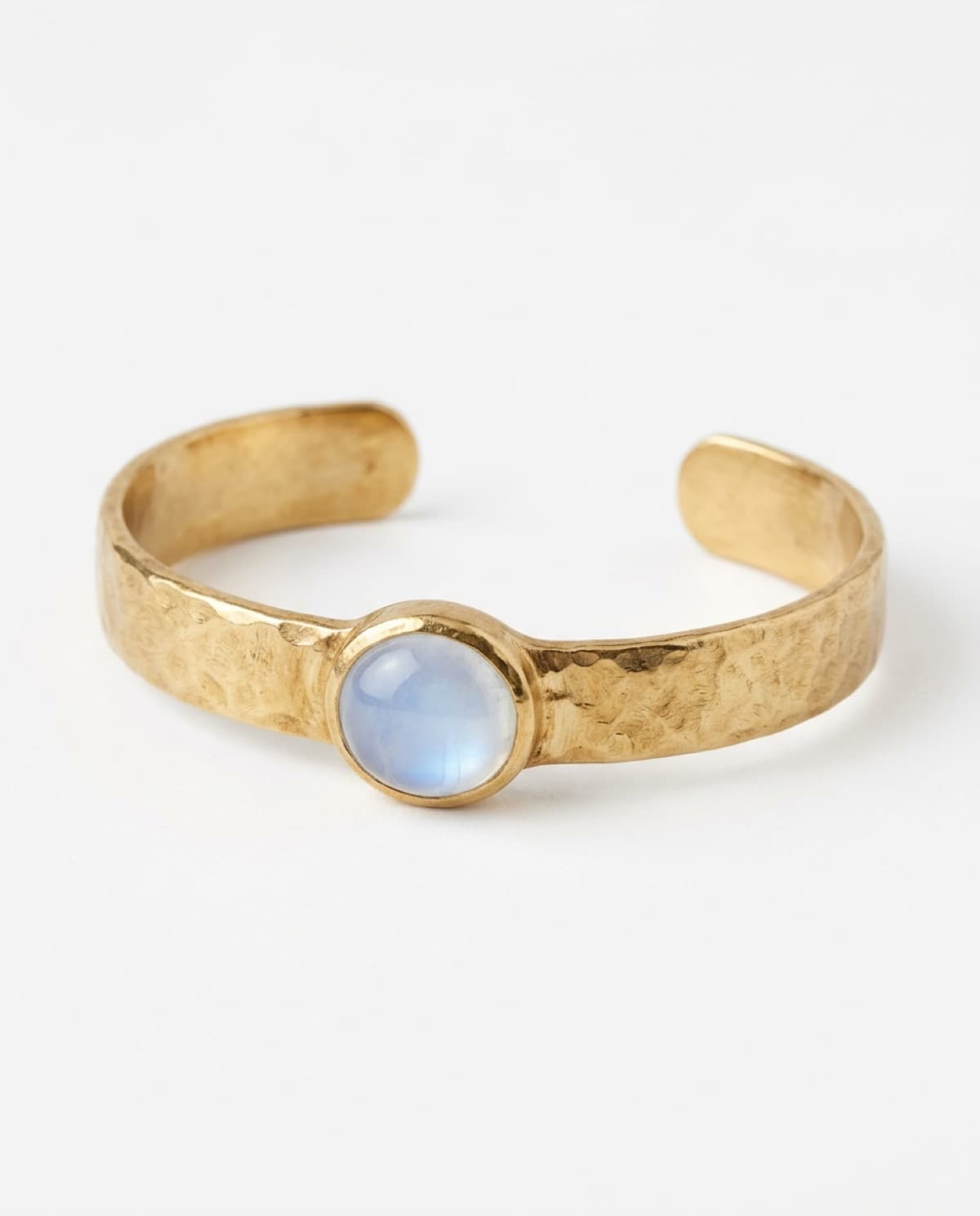
for the coil, you need to shape it the way you'd shape a necklace — deliberately, with a fingertip or a chopstick. a chain bracelet coils into a loose double loop with the clasp tucked under. a bangle or cuff gets stood up slightly on its edge or nested with a second piece so it casts a shadow and reads three-dimensional rather than flat.
the light
side, soft, warm — and because most bracelets carry more polished metal than a ring does, treat them like you'd treat a chain: rake the light across the piece so the links or the hammered face catch a run of small highlights, rather than hitting it square and getting one flat sheet of glare.
the two mistakes that bite hardest on bracelets:
- direct sun on a bangle — a smooth metal bangle in direct sun becomes a mirror and throws the window, the room, and sometimes your phone straight back at the camera. diffuse it, and rotate the piece until the reflection falls into shadow rather than into the lens.
- overhead pendant light — kills the dimension on a cuff completely. a cuff needs raking side light to show its thickness; lit from above it reads as a flat gold smear.
a bangle is a mirror with a price tag. your job isn't to light the bangle — it's to control what the bangle reflects.
the surface
the four warm surfaces carry over from the ring guide. bracelet-specific notes:
warm wood is the strongest pick for a coiled flat-lay. the grain reads under the curve of the chain and gives the coil somewhere to cast a soft directional shadow, which is what restores the dimension you lost by taking it off a wrist.
for a cuff or bangle, oxblood or champagne silk does the same half-stop lift it does for gold rings, and the drape of the fabric under the curve of the metal looks intentional. a cuff stood up on draped silk is one of the most editorial shots you can get at a kitchen counter.
avoid the temptation to shoot a bracelet inside a glass display case or on a velvet bust-pad — both read dated, and the case adds reflections you'll fight the whole way.
the format
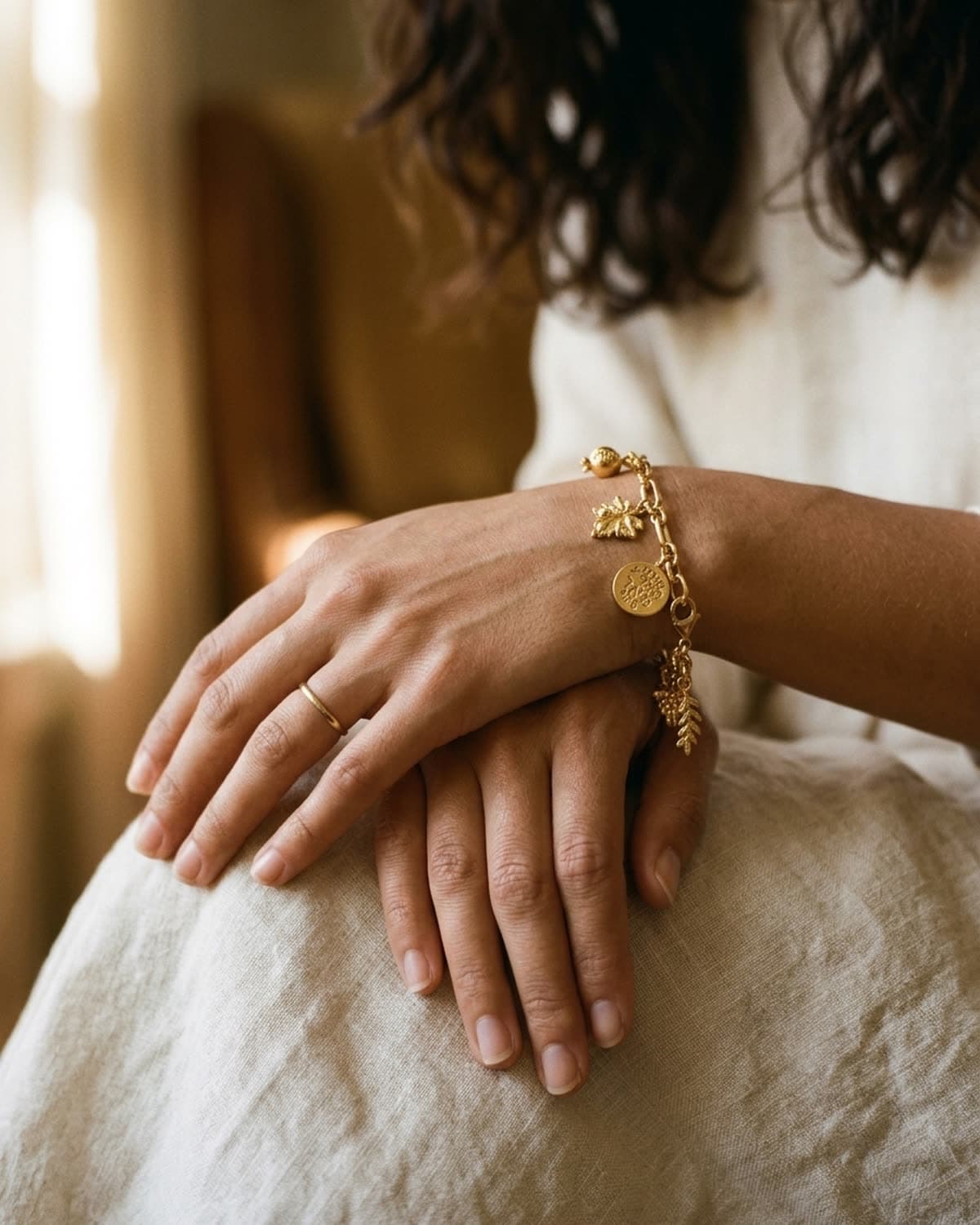
the wrist. the hero shot. a relaxed wrist, hand draped rather than held stiff, the bracelet sitting where it naturally falls — usually just behind the wrist bone. the classic pose is a hand resting lightly against the opposite forearm, or curled loosely toward the face. the rules that carry over from ring hand-shots: fingers relaxed, non-dominant hand, weight in the lower third of the frame.
the coil. the flat-lay detail shot described above — for the clasp, the link gauge, the stones, the inside engraving. second image in the listing, the one a buyer studies before they commit.
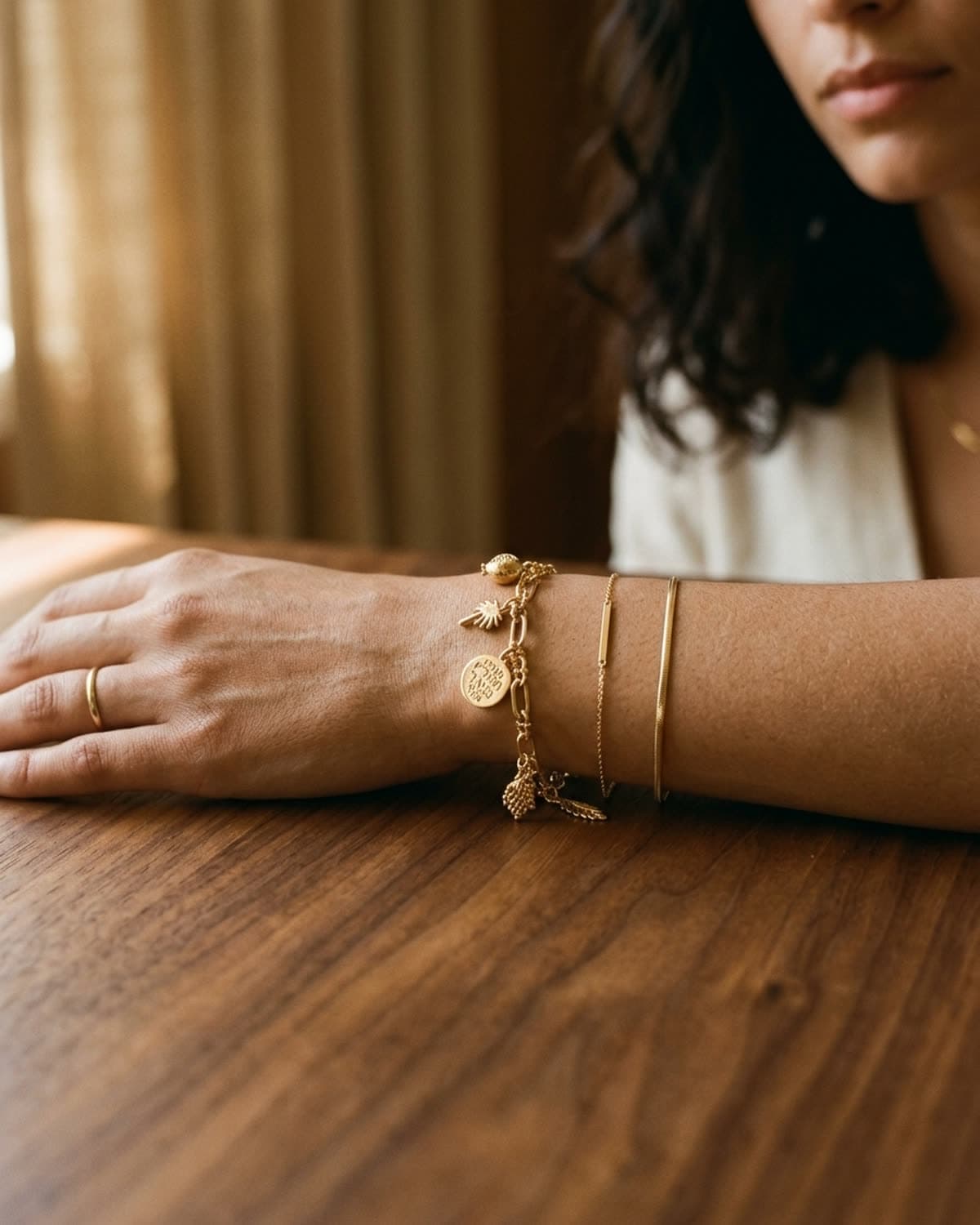
the stack is a third format worth knowing if you sell bangles or thin chains: three to five pieces graduated by width, on a wrist or coiled together, with a little separation so each keeps its own line. stacks photograph as "a look" rather than "an item," which raises the average order value of anyone who clicks.
the clasp
the one detail that quietly ruins bracelet shots: the clasp. a lobster clasp or box clasp left sitting in the front of the frame draws the eye straight to the cheapest-looking part of the piece. two rules:
- on a coil or flat-lay, rotate the clasp to the back or tuck it under the chain so it's out of frame entirely.
- on a wrist shot, let the clasp sit on the underside of the wrist where it naturally rests, and frame the top of the wrist where the design lives.
a buyer wants to see the clasp eventually — put it in a dedicated detail frame, lit cleanly, rather than letting it crash the hero shot.
the focus
bracelets give your iphone the same trouble bangles give every camera: a big polished curve the meter wants to overexpose. the fixes are the standard three:
- portrait mode with stage light tapped so it holds focus on the object.
- tap-and-hold to set AE/AF LOCK — lock on the most detailed part of the piece (a stone, the clasp, a hammered section), not the bare curve.
- drag exposure down a notch or two. more than usual here — polished bangles are the brightest thing you'll shoot, and iphones overexpose them hard indoors.
if a bangle still throws glare no matter how you turn it, move the window, not the bangle: shooting with the light coming from a steeper side angle drops the reflection below the rim of the frame.
what's working in 2026
bracelets followed the same move as the rest of the category — away from the white-sweep catalog look and toward warm, single-source, on-body shots. the wrist-in-warm-light hero and the coiled flat-lay detail are the two-shot combination most independent jewelers are running now, and the stack shot is doing real work for anyone selling bangles or permanent-jewelry-style chains.
as with necklaces, the cleaner your source the better anything downstream looks: a well-shaped coil or a relaxed wrist in even light gives an ai polish good geometry to preserve. a flat dead circle gives it nothing to work with.
shooting the rest of your inventory? necklaces share the chain-shaping logic, rings and earrings each have their own framing. same window, different crop.
the shortcut
if posing a wrist and coiling a chain at a kitchen counter isn't your idea of a good afternoon, bling ai does it from one photo. upload a flat iphone shot of the bracelet, pick a scene, and get a wrist hero and a clean coil in under a minute — rights included, ready for etsy or instagram.
start creating for free in your browser, or get the iphone app. 100 free credits, no card needed. or browse the showcase to see bracelets and cuffs polished across surfaces, every shot from a single iphone source.