bling ai
tools · pricing
jewelry pricing calculator.
what to charge for a handmade piece so it actually turns a profit. add your materials, time, and the fees that come off every sale, pick a margin, and get a retail price, a wholesale price, and the break-even behind them.
your cost to make it
where it sells
price by
margin is the profit you keep after every fee, as a share of the price. 50% is a healthy target.
suggested retail price
$78.40
$39.20 profit · 50% margin kept
- unit cost to make
- $31.50
- break-even price
- $35.08
- wholesale (2× cost)
- $63.00
- break-even ROAS
- 2.0×
at 20 sales / month
price at each target margin
| target margin | retail price | profit / sale | margin kept |
|---|---|---|---|
| 30% | $52.48 | $15.74 | 30% |
| 40% | $62.87 | $25.15 | 40% |
| 50% | $78.40 | $39.20 | 50% |
| 60% | $104.10 | $62.46 | 60% |
the math
price is built from cost, not guessed.
most underpricing comes from leaving something out. four things go into a real cost, and fees come off the top of every sale after that.
materials
metal, stones, findings, chain: everything that ends up in the finished piece.
labor
your bench time at an honest hourly rate. the cost makers most often skip.
overhead
packaging, and a share of tools, rent, and the shipping you eat on free shipping orders.
fees
the marketplace cut and payment processing that come off the sale price, not the cost.
worked examples
three pieces, priced honestly.
the same trap every time: cheap materials hide expensive time. here is what a fair price looks like once labor and fees are in.

stacking ring
≈ $55 retail$9 materials · 20 min labor
a maker would often tag this at $28. at a real hourly rate and a 50% margin after Etsy fees, it needs to be closer to $55.
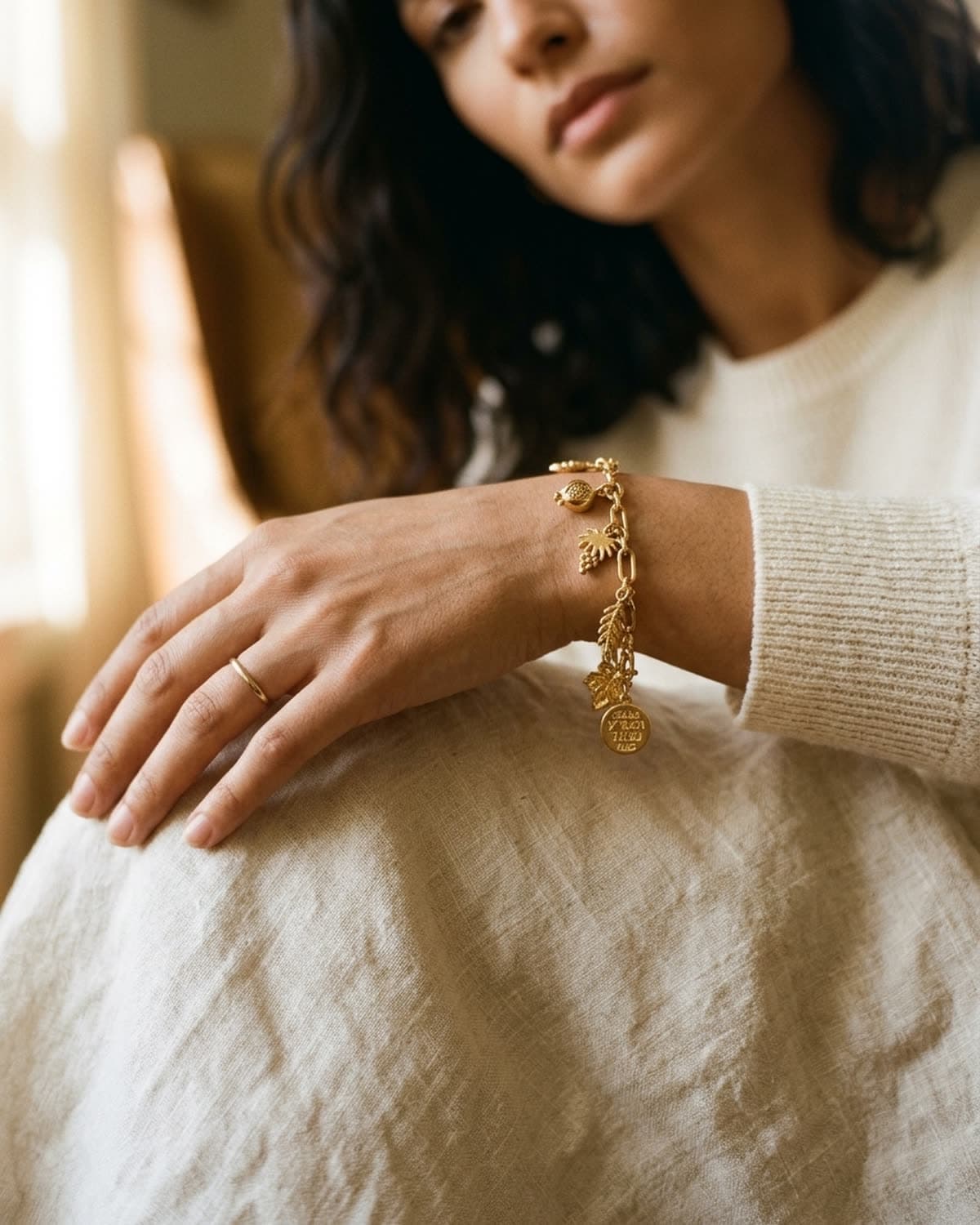
beaded bracelet
≈ $75 retail$14 materials · 25 min labor
the beads are cheap; the stringing and finishing time isn't. paying yourself for that time is what moves this from $35 to $75.

pendant necklace
≈ $100 retail$18 materials · 35 min labor
a bezel set pendant is slow work. priced to keep 50% after fees, a $100 tag isn't ambitious. it's break even plus a fair wage.
these shots were all made from a single phone photo in bling ai, part of how a fair price becomes an easy one. run your own numbers in the calculator above.
keystone vs. reality
why a 2× markup isn't a 50% margin.
keystone pricing, doubling your cost, is the rule of thumb most makers start with. it feels like a 50% margin, but it isn't, because the marketplace takes its cut after you set the price.
sell a $40 piece that cost $20 and keystone says you made $20. but Etsy's transaction fee, payment processing, and a listing fee quietly remove $4 to $6 first, so the real margin is closer to 35%, and any ad spend eats further in.
price = (unit cost + fixed fees) ÷ (1 − fee rate − target margin)
the calculator solves that equation for you, so the margin you pick is the margin you keep. it also reports a break-even ROAS: the minimum return your ads need before a promoted sale starts making money.
by channel
the same piece, priced for where it sells.
the method doesn't change from channel to channel. the fees and the room you need to leave do.
your own site
lowest fees (payment processing only), so the most margin, but you pay for the traffic. price full retail and fund your own ads.
marketplace
Etsy and Amazon bring the traffic and take 10%+ per sale. price so a healthy margin survives the fee, not just the cost.
wholesale
shops buy at about half your retail to resell. it only works if retail was priced with that headroom built in from the start.
consignment & fairs
consignment shops take 30 to 50%. craft fair booth fees are a fixed cost to spread across the day's pieces. both need it priced in.
what goes wrong
five ways makers underprice.
- 01Not paying yourself for labor, the single biggest cause of a busy shop that never profits.
- 02Treating a 2× markup as a 50% margin. After fees it's closer to 35%.
- 03Forgetting marketplace and payment fees, which come off the price you set, not the cost.
- 04Offering free shipping without folding the shipping cost into the price.
- 05Pricing to match competitors instead of covering your own real costs. you don't know theirs.
where you sell
built for how indie jewelers actually sell.
selling on Etsy, your own Shopify store, or wholesale to shops changes the fees, not the method. set the platform and the number adjusts. more on each channel is in the guides for Etsy sellers and jewelry makers.
pricing in solid gold or silver? cost your metal by weight first with the gold price calculator, then drop that into the materials field here.
plain english
pricing terms, defined.
- unit cost (COGS)
- everything it costs to produce one piece: materials, labor, packaging, and absorbed shipping.
- margin
- profit as a share of the selling price. a $50 piece with $20 profit has a 40% margin.
- markup
- profit as a share of cost. that same piece, $20 profit on $30 cost, is a 67% markup. margin and markup are not the same number.
- keystone
- doubling cost to set the price (a 2× markup, ~50% gross margin). a starting rule, not one that accounts for fees.
- break-even price
- the lowest price that covers cost and fees with zero profit. never sell below it.
- break-even ROAS
- return on ad spend at which a promoted sale makes exactly $0. ads need to beat it to be worth running.
questions
jewelry pricing, answered.
how this is calculated
the calculator solves price = (unit cost + fixed fees) ÷ (1 − fee rate − target margin), so a target margin is the margin you keep after fees rather than before them. the preset fee rates reflect the public schedules for Etsy and Amazon Handmade and are editable. always confirm the current rate for your shop, as platforms change them. estimates are a starting point, not financial advice.
fee rates last reviewed July 2026.
more tools
the rest of the bench.
photography
jewelry photo checker
score a product photo for lighting, focus, background and framing, and check it against etsy, shopify and instagram size rules.
open tool →pricing
gold price calculator
live gold value by karat and weight: melt value plus a realistic dealer payout.
open tool →pricing
permanent jewelry pricing calculator
price welded bracelets, anklets, and necklaces: chain, labor, and overhead into a per-inch price and margin.
open tool →pricing
silver price calculator
live silver melt value by fineness and weight: sterling, coin, and fine silver, plus a realistic scrap payout.
open tool →pricing
platinum price calculator
live platinum melt value by fineness and weight, from 950 and 900 marks, plus a realistic dealer payout.
open tool →identification
hallmark decoder
read the stamp inside a piece: 925, 750, 585, 417, platinum and plating marks.
open tool →reference
ring size converter
convert a ring size across US, UK, EU and mm, with a full chart and how to measure at home.
open tool →
price it, then sell it
a fair price is easier when the photo earns it.
bling ai turns an iphone photo of your jewelry into a shot ready for a campaign, so the price on the tag looks right to the buyer.