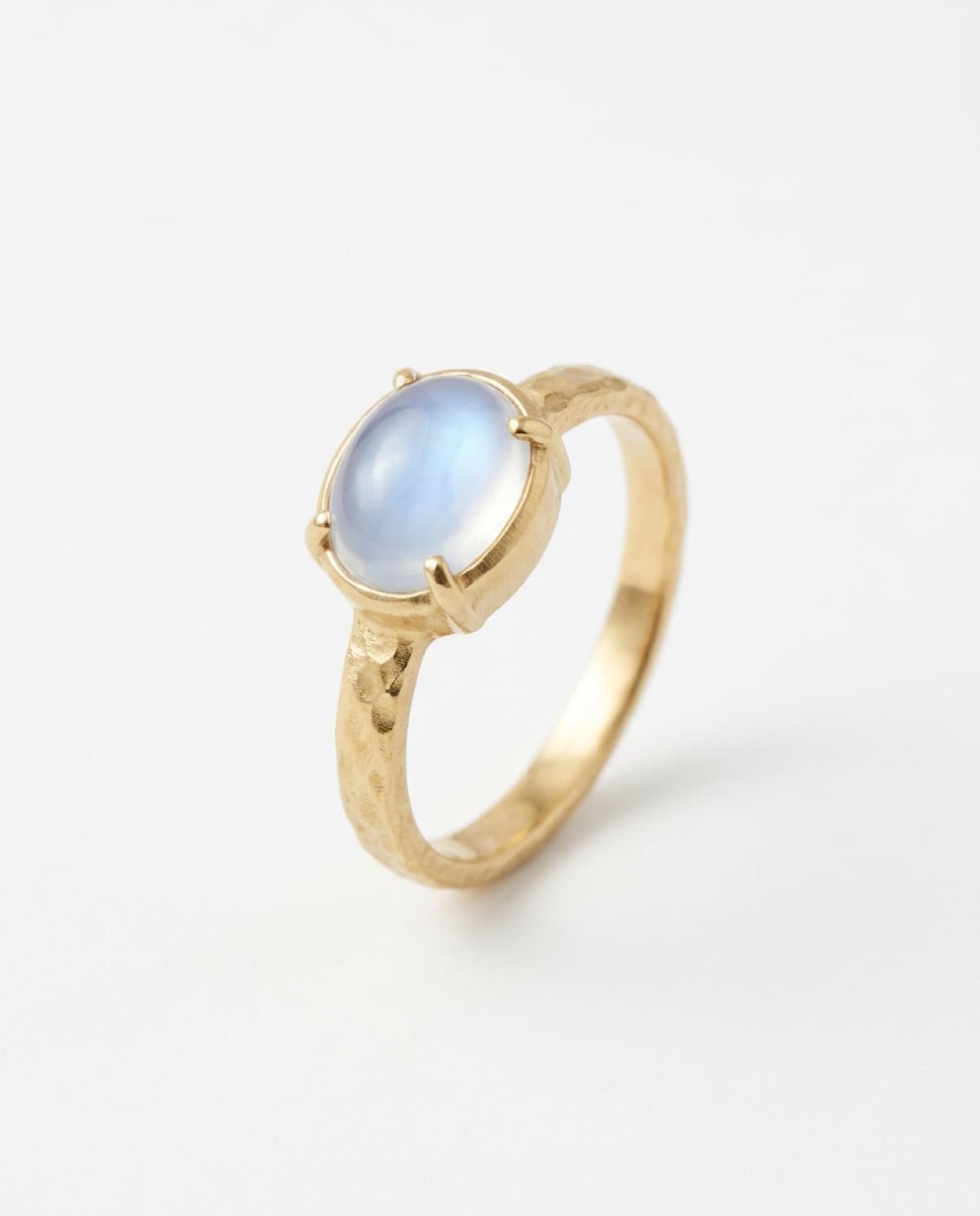
bling ai
the fastest way to make a beautiful piece look forgettable is to shoot it on plain white. it's the default every marketplace nudges you toward, and it's the single most common reason indie jewelry photos read cheap. flat white under flat light gives gold nothing to react to — no warmth to borrow, no shadow to sit in, no reason for the eye to stop scrolling.
background is not a neutral choice. it sets the warmth, carries the mood, and decides whether your piece reads editorial or catalog before a buyer reads a word. here's what actually works, why, and what to retire.
why white fails gold
white seamless paper was the studio standard for a decade, and for diamonds shot under controlled strobes it still has a place. but for the warm-metal, natural-light photography most independent jewelers actually shoot, white does three things wrong:
- it gives warm metal nothing to borrow. gold looks richest when something warm nearby bounces into it. white bounces back neutral, so gold reads pale and a little grey.
- it flattens shadow. on white-under-even-light there's no falloff, so the piece loses dimension and looks pasted on.
- it reads dated. the bright-white catalog look peaked years ago. a buyer's eye now clocks it as "old listing" without knowing why.
white doesn't make jewelry look clean. it makes jewelry look uninsured. warmth is what reads expensive.
the four that work
in rough order of how forgiving they are.
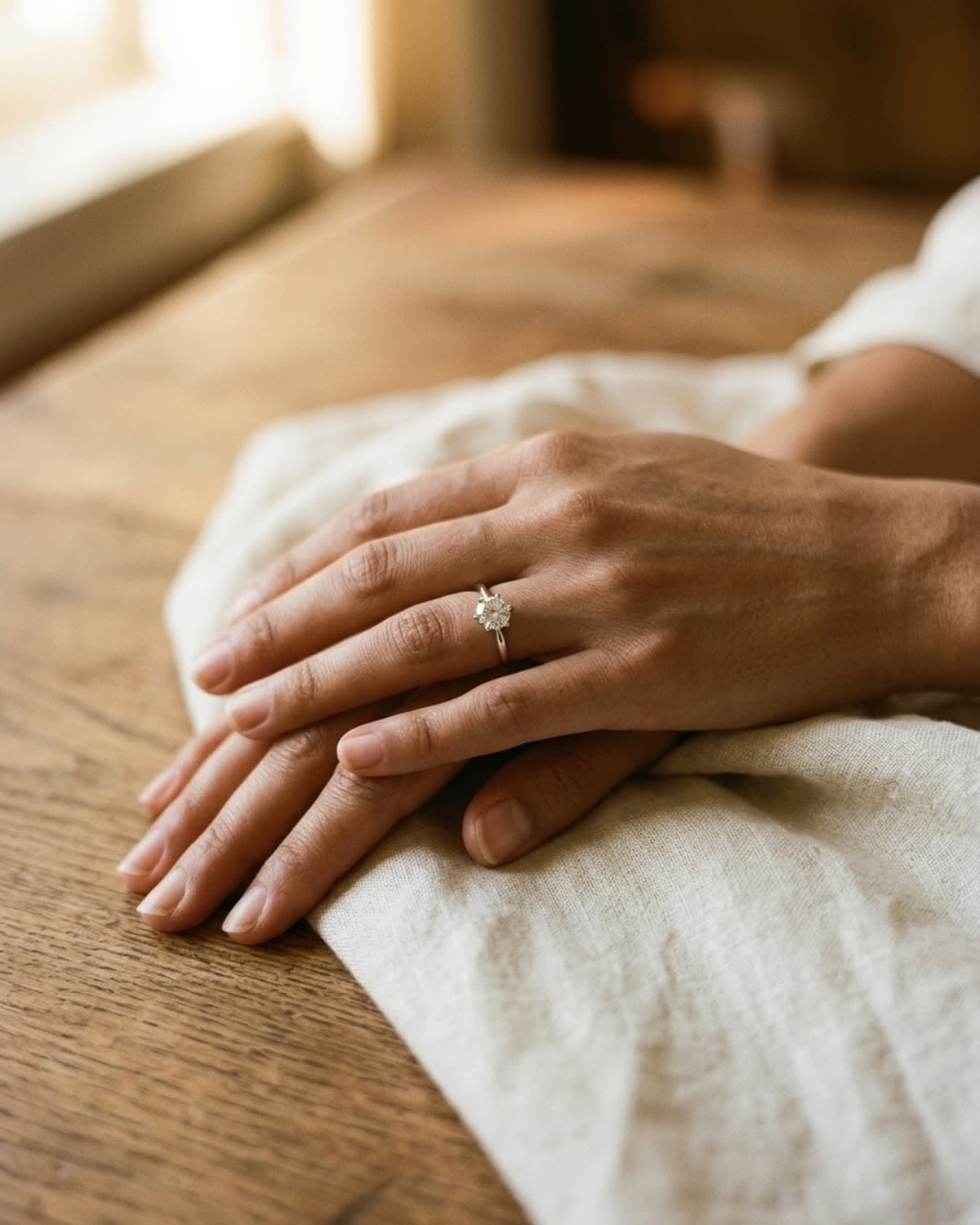
cream linen is the default for a reason: it absorbs harsh light, its wrinkles read intentional, and it gives any metal something warm to sit against. a clean linen napkin from a drawer is enough. it is the hardest surface to get wrong.
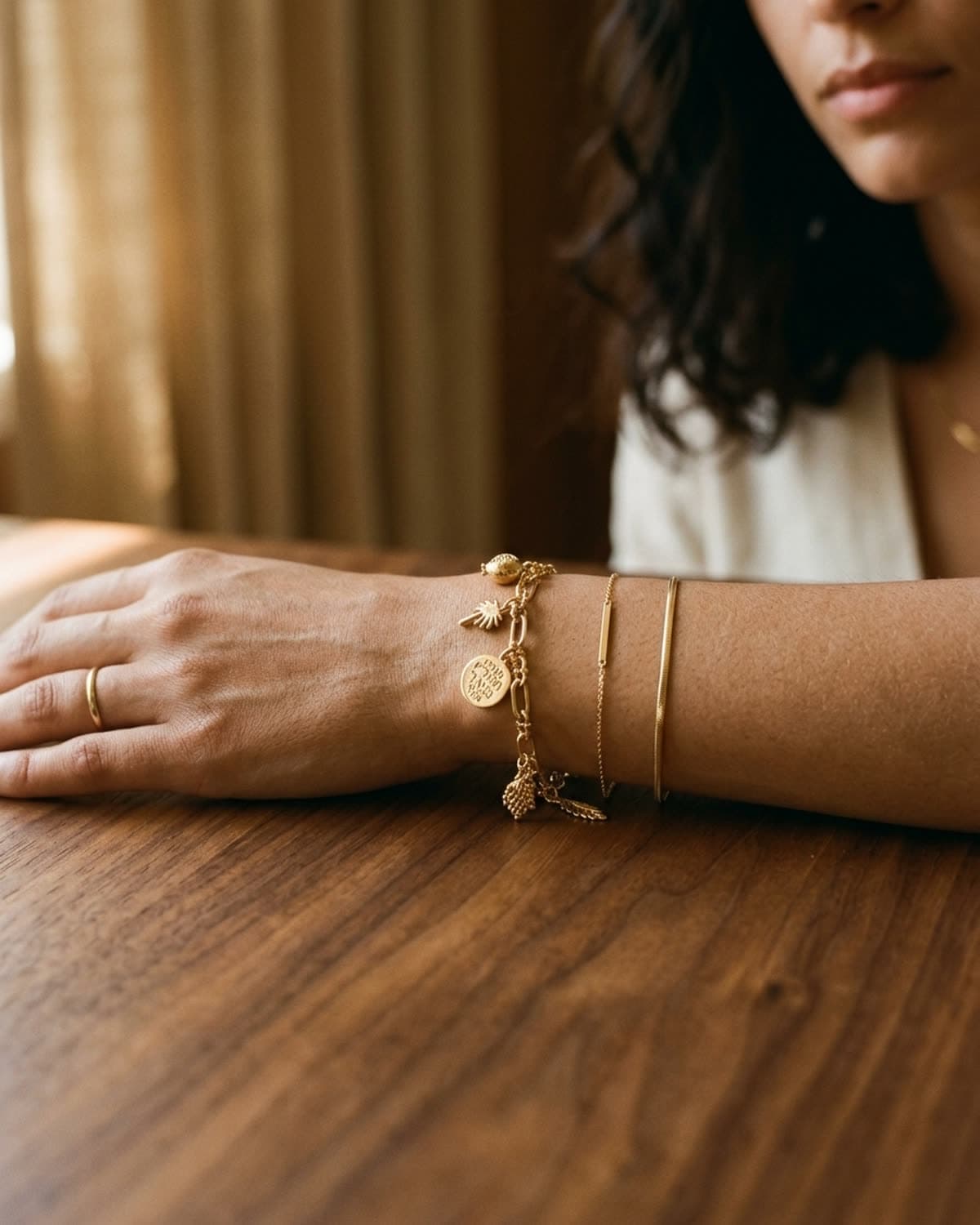
warm wood — walnut, oak — adds depth, especially under low directional light where the grain catches shadow. it's the strongest pick for coiled chains and flat-lays because it gives the curve somewhere to cast a shadow. cooler woods and painted surfaces read flat; they reflect rather than absorb.
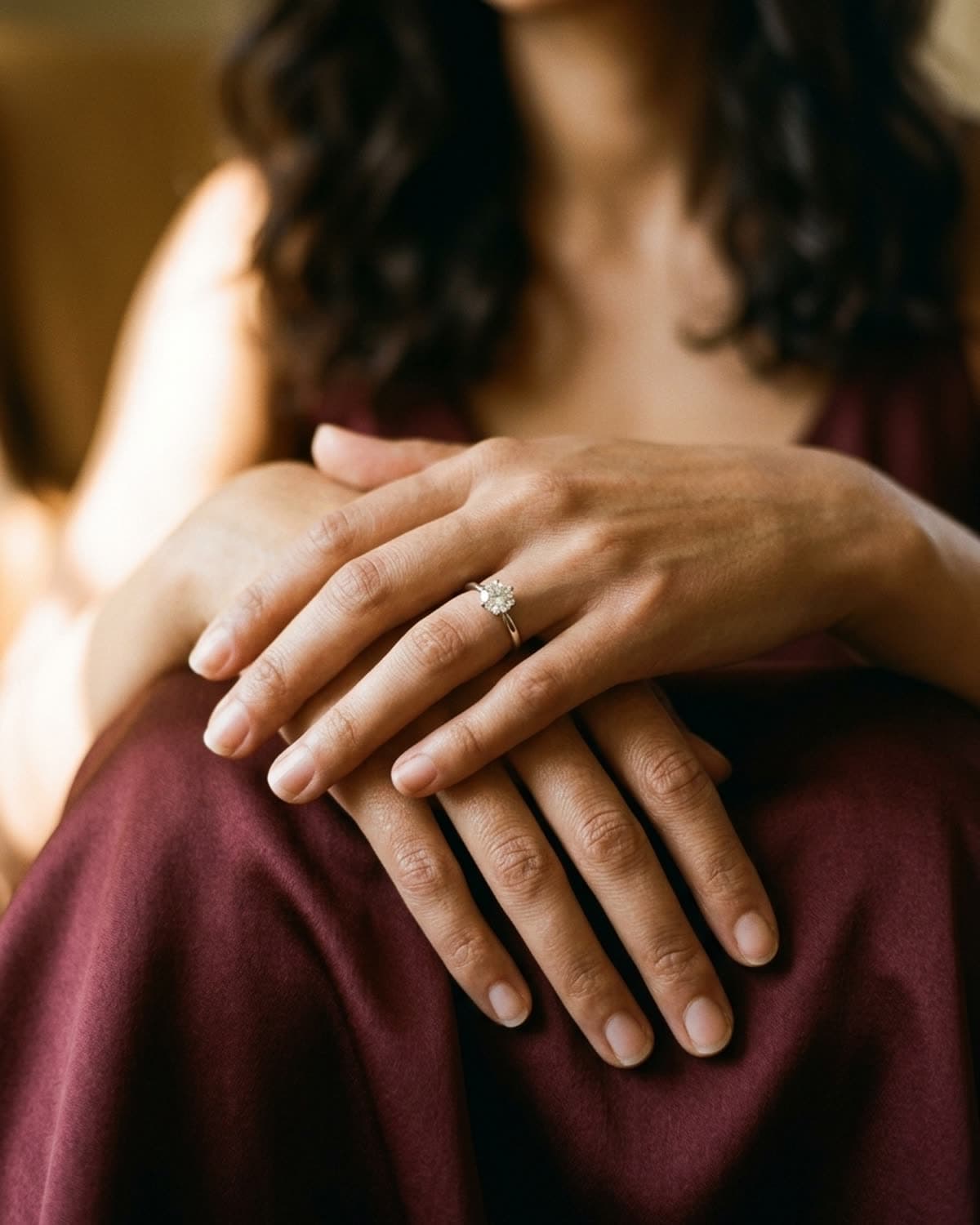
oxblood or champagne silk is the most editorial of the four. silk catches window light and bounces it warm, lifting gold roughly half a stop with no effort. a silk camisole or scarf works. the drape of the fabric also echoes the drape of a chain, which is why it's unbeatable for necklaces.
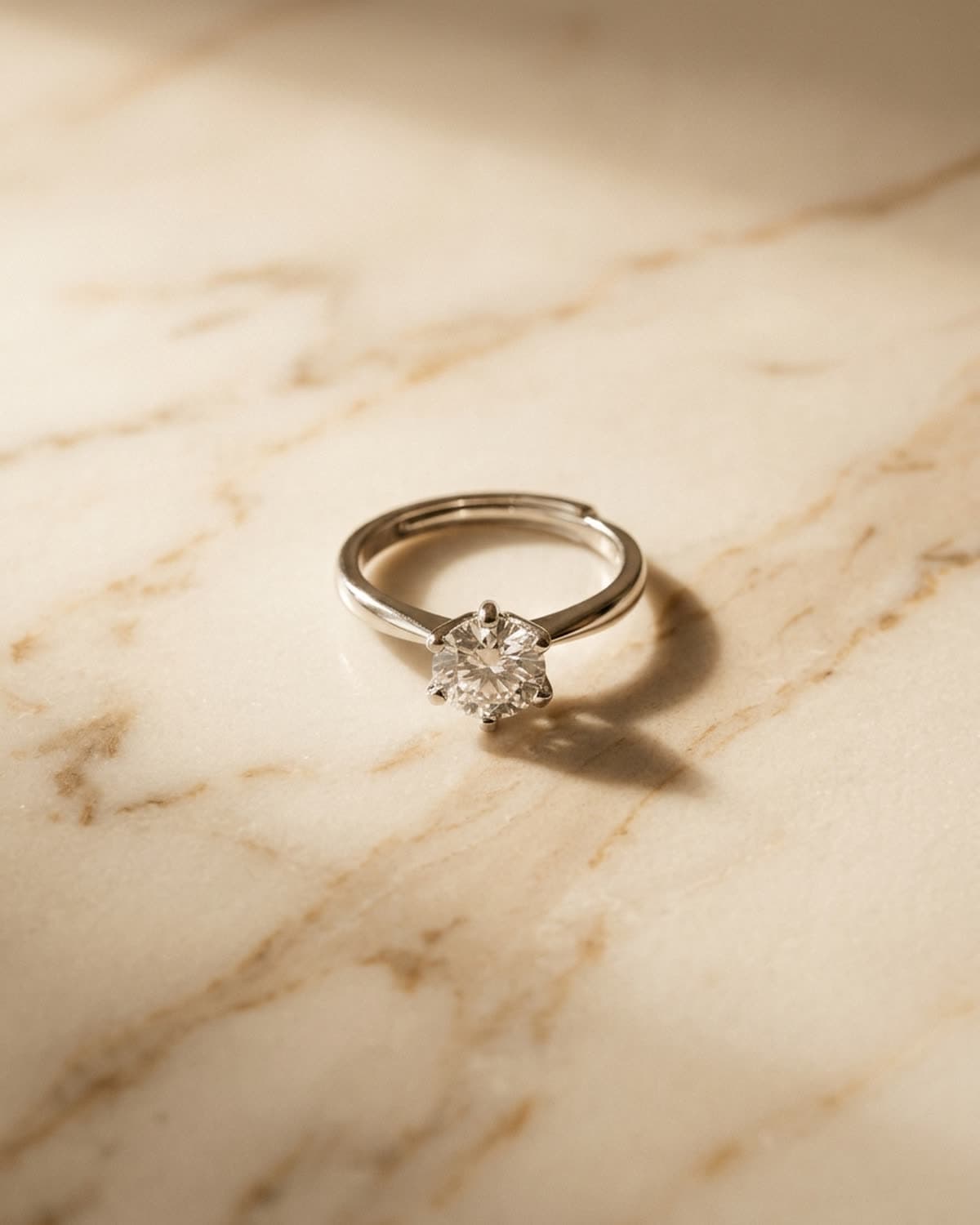
warm marble is a reach worth knowing. it photographs beautifully overhead under bright soft light, but at close range it can read cold and clinical — especially white-veined rather than cream-veined. if you shoot on marble, commit to the flat-lay format rather than the three-quarter.
match the background to the metal
the one rule most guides skip: warm backgrounds flatter warm metals, and the reverse is also true.
- yellow gold and brass want warmth — cream, wood, oxblood, champagne silk. these are the surfaces above, and gold is why they're the default.
- silver, white gold, and platinum can take a cooler hand. they hold up against grey linen, pale stone, and cooler marble in a way gold doesn't, because they aren't relying on a warm bounce to look rich. that said, even cool metals usually look more expensive warm — a warm background on platinum reads luxe, a cool background on gold reads clinical, so when in doubt, warm.
- gemstones follow their own color. a green tourmaline or emerald lifts against warm neutrals; a sapphire or moonstone can take a cooler, moodier ground. let the stone's color decide, and keep the surface a supporting actor, never a competitor.
the ones to retire
these were trends. they've aged.
- plain white seamless — covered above. fine for diamond-under-strobe, wrong for warm-metal natural light.
- glass display cases — reflections you'll fight the entire shoot, plus a "mall jeweler" association.
- mirrors — double the piece, double the dust, double the stray reflections. almost never worth it.
- bright colored craft paper and busy props — flower petals, scattered coffee beans, loud fabric. they pull the eye off the piece and read as a 2018 etsy flat-lay.
- velvet bust forms and pads — the bust form has lost to the on-body collarbone and wrist shot decisively. velvet pads flatten light and shed lint that photographs as white specks.
none of these are wrong in some absolute sense — they're just dated, and dated is its own kind of expensive mistake when a buyer's first impression decides the click.
one surface, used everywhere
a quieter benefit of picking a surface and sticking to it: consistency. if every piece in your shop sits on the same cream linen in the same window, your etsy grid and your instagram feed read as one cohesive brand before a buyer parses a single product. inconsistent backgrounds read as a hobby. a consistent one reads as a label. choose one warm surface, shoot everything on it, and let that be your signature.
the shortcut
if buying silk and chasing golden hour isn't where you want to spend your time, this is exactly what bling ai automates. you upload one iphone photo of your piece — even a quick one on whatever's nearby — and choose the world it lands in: warm linen, oxblood silk, golden-hour wood, a botanical glasshouse, fourteen studios in all. the background, the light, and the warmth are handled, and the same piece can sit in a different scene for every platform. you keep the rights.
start creating for free in your browser, or get the iphone app. 100 free credits, no card needed.
want the full picture before you choose? our guide to the fourteen aesthetics walks through every world brand by brand, and the per-piece guides — rings, earrings, necklaces, bracelets — cover the framing that pairs with each surface.