bling ai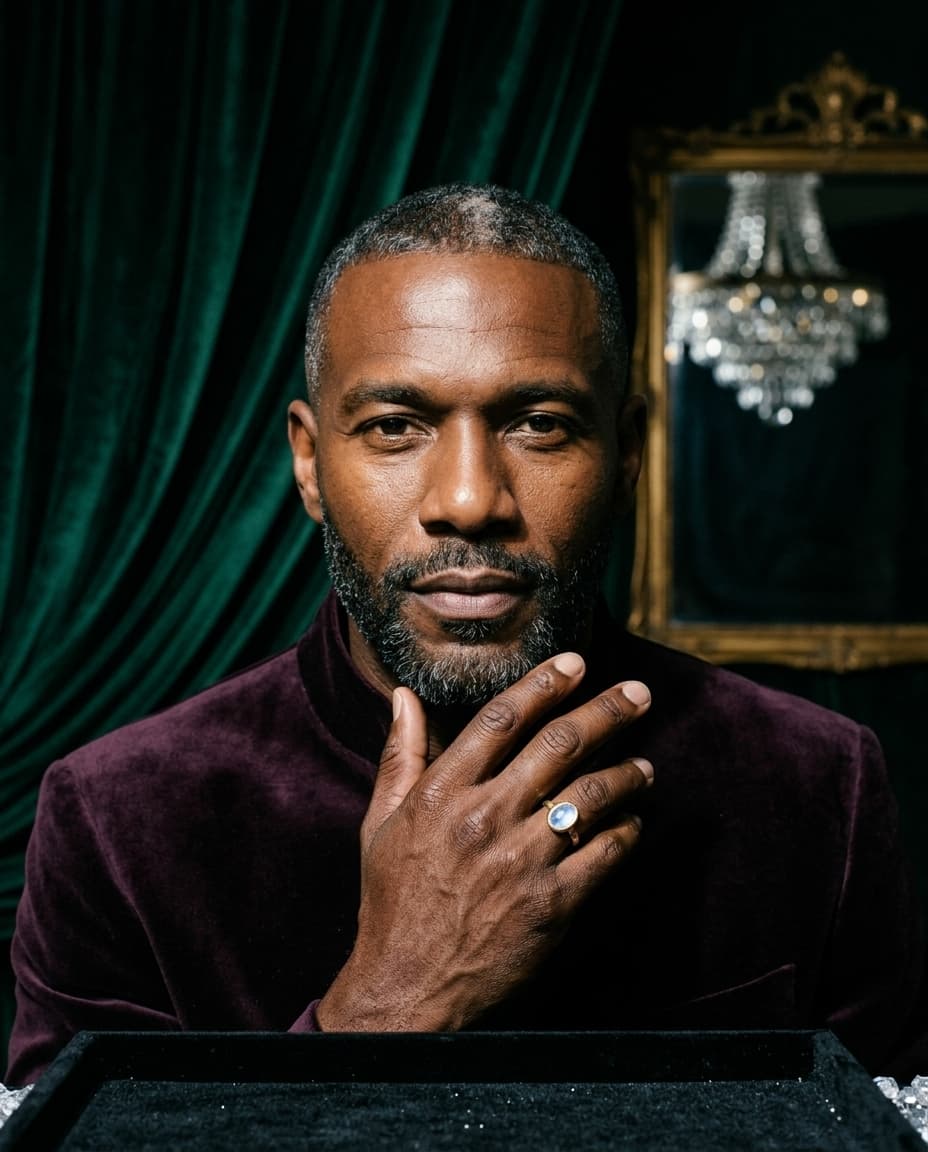
most ai jewelry photography tools default to a single twenty-something woman. some have two or three. if you sell watches, signets, cufflinks, or men's chains, the result is what you'd expect — your piece on a model who looks miscast for it, in lighting that flatters fine jewelry but reads soft on a man.
bling ai has five male models — jin-soo, marcus, theo, rafael, arjun — and four studios specifically tuned for menswear-coded pieces. men's jewelry has never been the second-class category in our cast, and this guide is the field manual for shooting it.
what men's jewelry photography needs
three things separate good men's jewelry photography from generic-default “a guy wearing a watch” output:
weight. men's jewelry is most often sold on perceived heft. a signet ring, a heritage watch, a cuban link — they have to look substantial on the body. lighting that flatters delicate fine jewelry (soft, diffused, neutral) tends to flatten heavier pieces. you want directional light that gives the metal dimension and shadow that proves the piece has thickness.
masculine bone structure. the wrong model with the right piece is worse than no model at all. a delicate hand makes a 22mm watch look comical. a soft jaw makes a 16mm signet ring read as costume. the five models below are deliberately cast for masculine proportions — broad shoulders, square jaws, defined hands.
a setting that matches the buyer's mental image. men buying watches and signets imagine them in offices, libraries, leather chairs, wood-paneled bars. the buyer is comparison-shopping against the visual library of every watch ad they've ever scrolled past — so the setting has to match that lineage or the listing reads off.
bling ai handles all three when you pair the right model with the right studio. the rest of this guide is the pairings.
the five male models
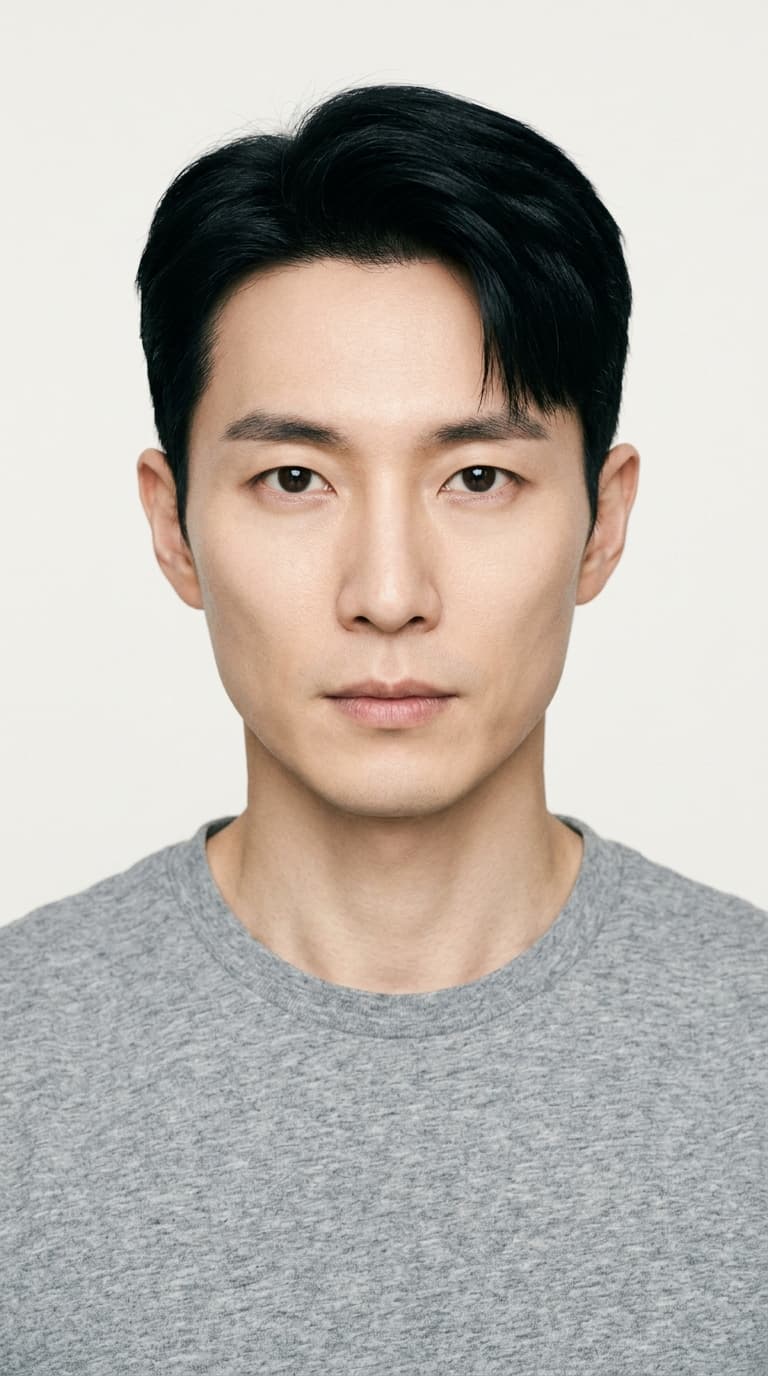
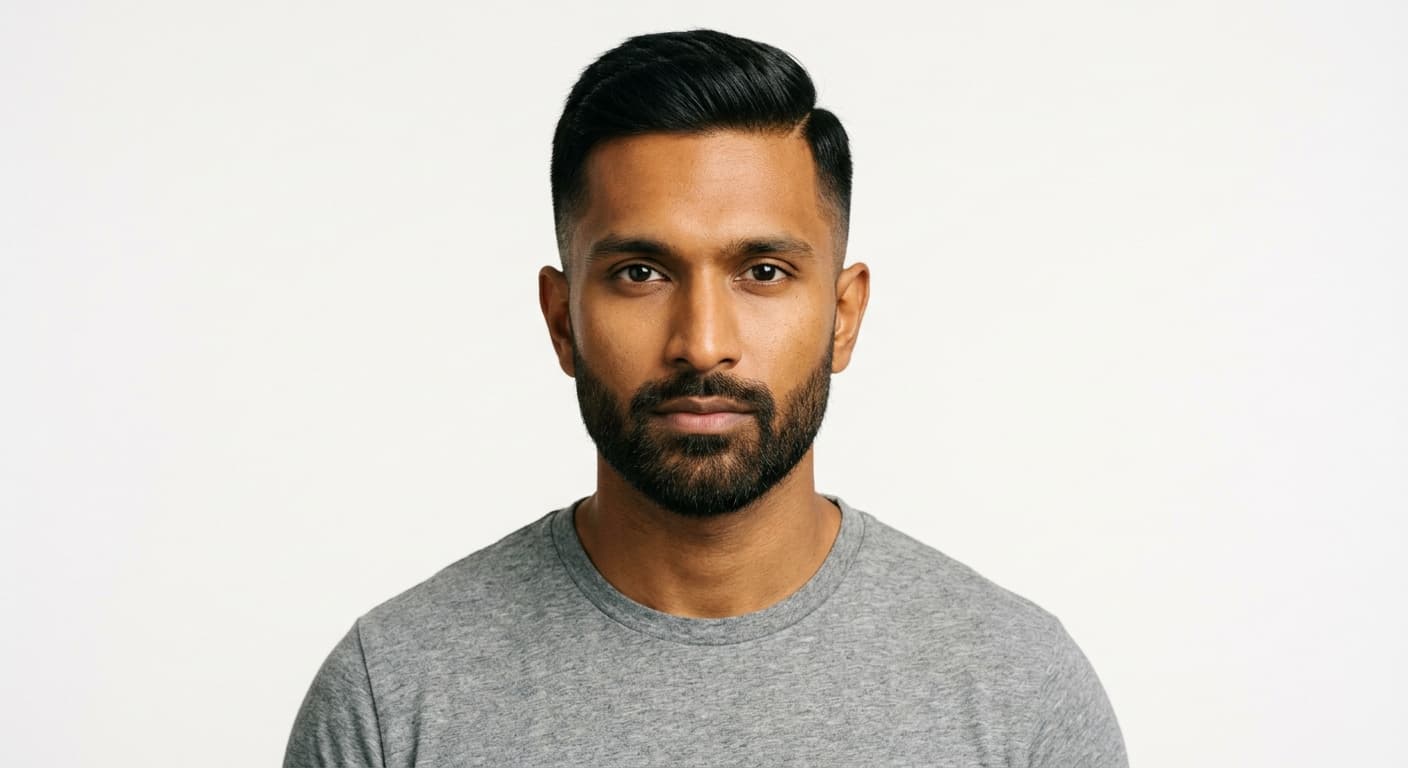
jin-soo — late 30s, korean. the founding male face. clean modern cut, composed direct gaze, sharp cheekbones, refined considered features. the default for suite — and the model most jewelers reach for when they want their piece to read as “quietly serious.” tom ford / loro piana-coded.
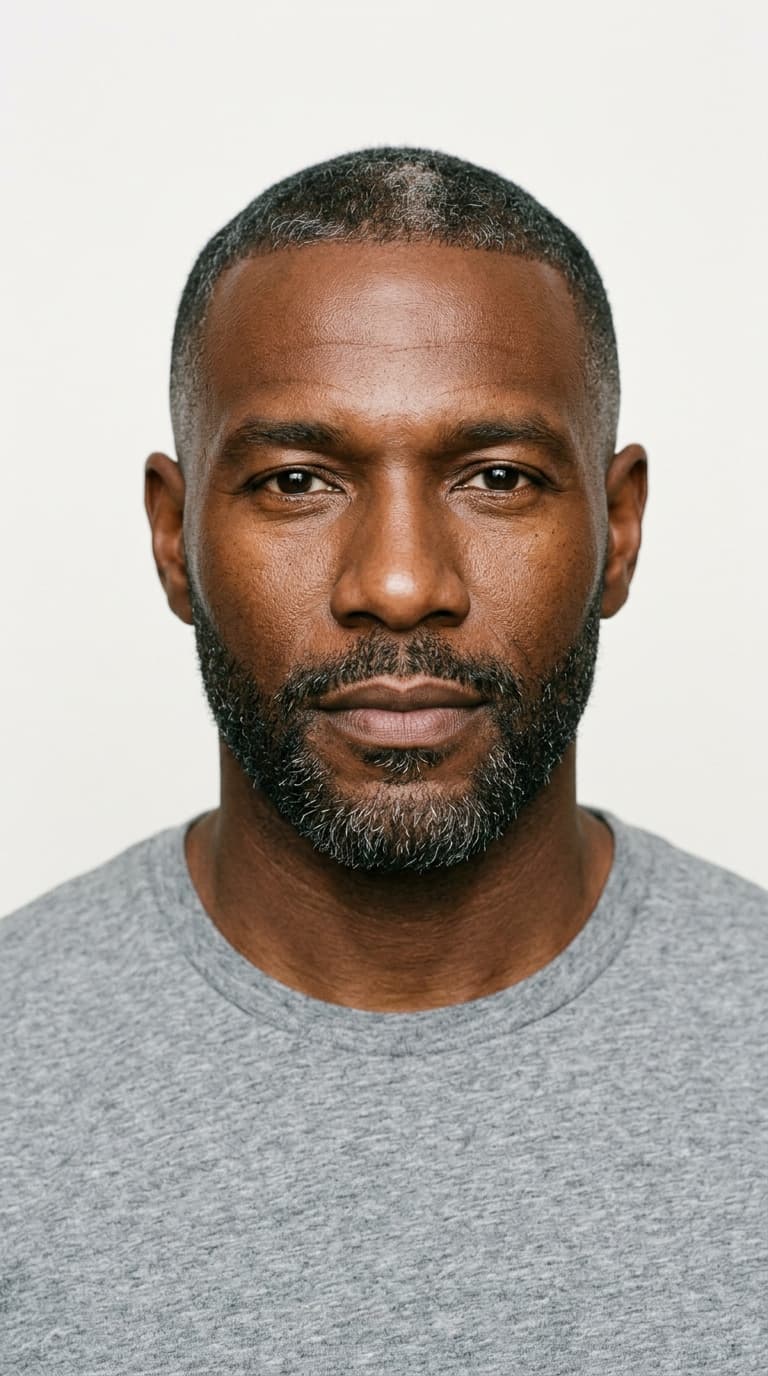
marcus — early 40s, african american. salt-and-pepper hair and beard, dark brown skin, broad cheekbones, square jaw. mature, knowing, dignified — the model you cast when the piece has gravitas. heritage watches, signet rings, archival pieces. the cover of this guide is marcus in vault. tom ford / vintage rolex print-coded.
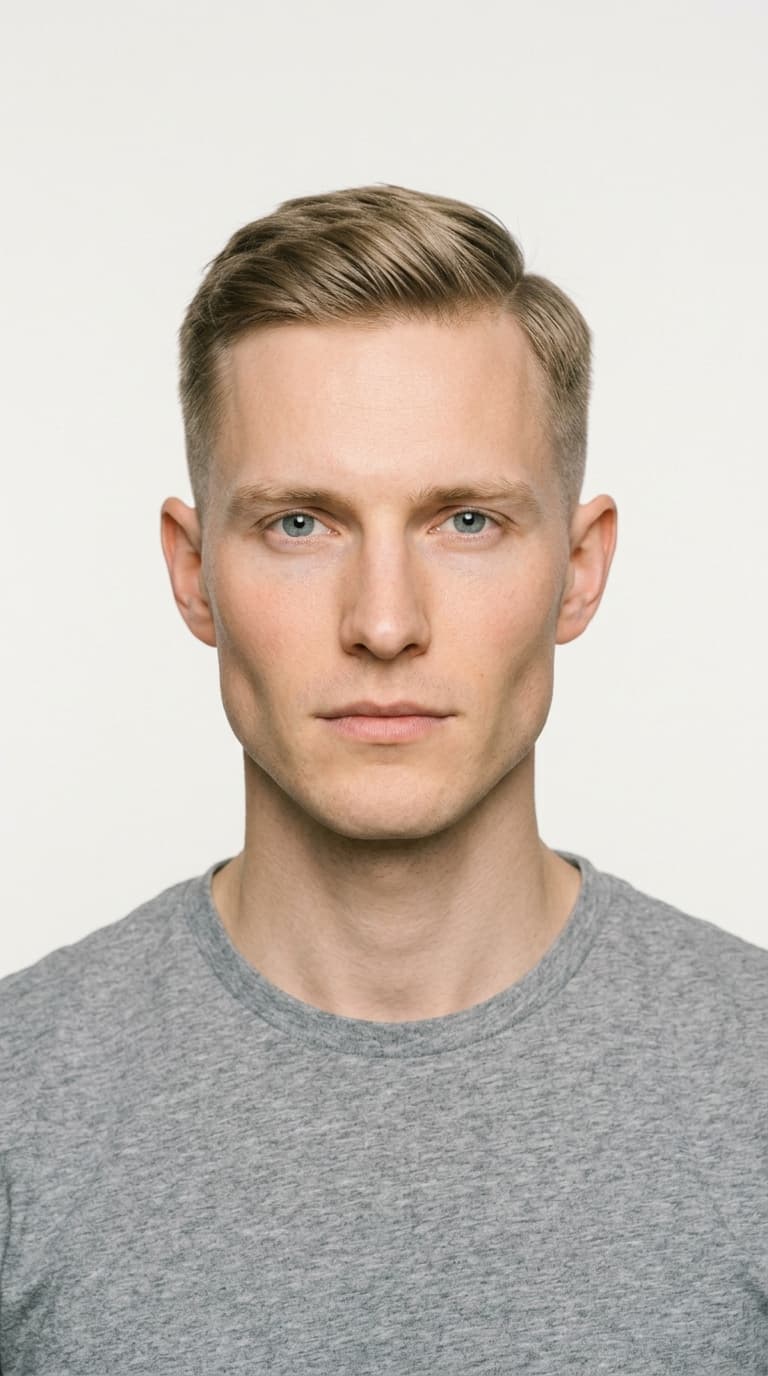
theo — late 20s, northern european. dirty-blond fade, pale-blue eyes, sharp angular cheekbones, defined square jaw. the modern menswear default — acne studios, jacquemus, lemaire energy. for contemporary pieces aimed at a buyer who shops at end. or mr porter.
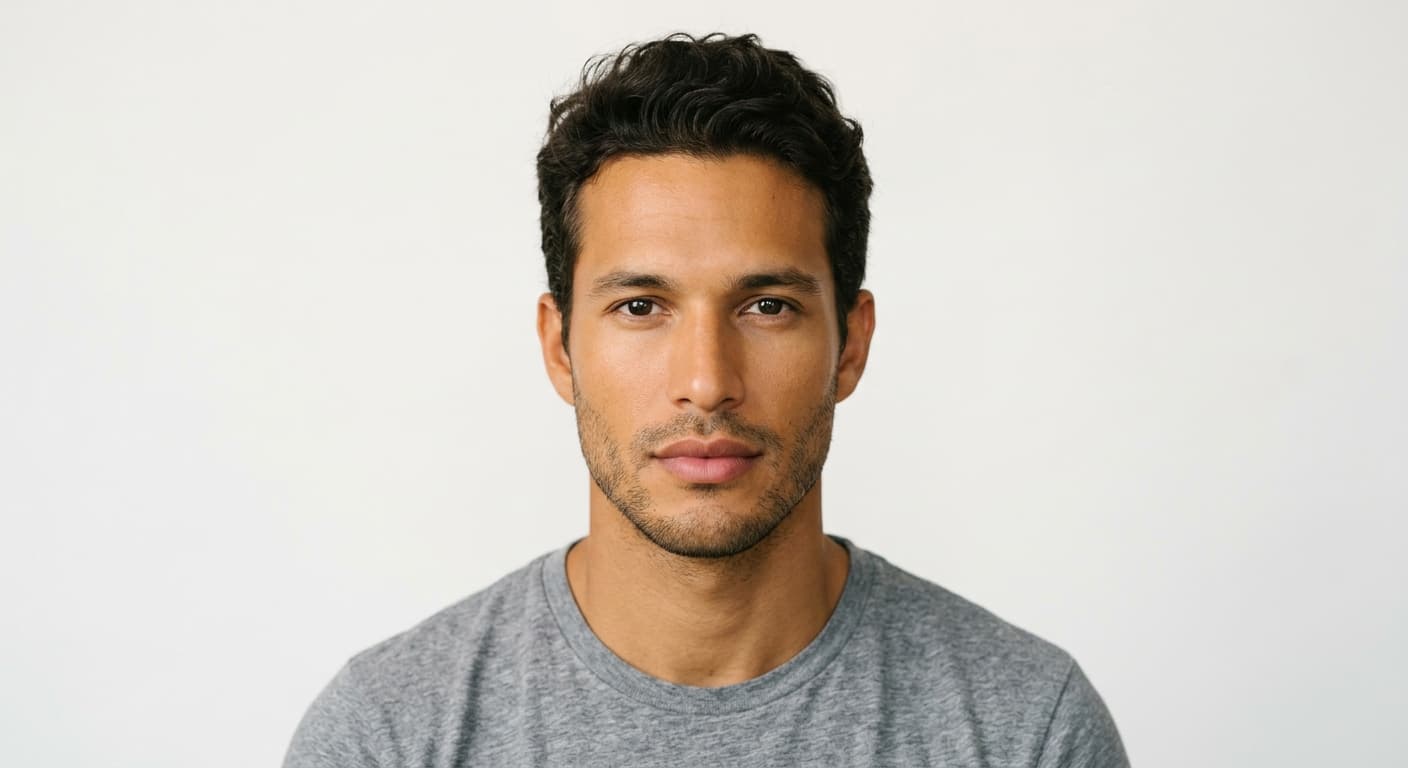
rafael — late 20s, brazilian-mediterranean. sun-warmed olive skin, tousled dark waves, 5-day stubble. warmth. lived-in styling. ideal for solstice and reel — anywhere warm light and a slightly bohemian menswear mood are wanted. saint laurent marrakech / jacquemus-coded.
arjun — early 30s, south asian indian. rich golden-bronze skin, neatly-trimmed full beard, strong square jaw. for pieces that want richness and considered styling — sabyasachi-meets-tom-ford. especially strong in atrium and vault.
five men. five distinct points on the masculine-aesthetic map. and unlike most ai roster systems, the identity is locked — cast jin-soo once and the next gen will be the same jin-soo, not a different korean man.
suite — the menswear studio
suite is the canonical men's jewelry studio inside bling ai. mahogany panels. leather chairs. a single brass desk lamp casting warm tungsten key light. evening interior, hospitality lounge aesthetic.
it's where men's jewelry photography lives in the visual library of every man buying it. tom ford ad campaigns shoot here. vintage rolex print catalogues shoot here. loro piana shoots here. the lighting, the wood, the warm shadow — every visual cue lines up with the buyer's expectation for what a “real” men's jewelry ad looks like.
suite's default house model is jin-soo. but every male model can be cast into it, and each gives suite a slightly different read:
- jin-soo in suite — quiet, exact, composed. the default; reads as “considered modern professional.”
- marcus in suite — mature, dignified. for heritage pieces, watches with provenance, signets that look passed-down.
- theo in suite — modern, clean, slightly aspirational. for contemporary menswear lines.
- rafael in suite — warm, lived-in, slightly bohemian. for pieces that want to read as “not stuffy.”
- arjun in suite — rich, considered. for pieces with worked gold, hand-engraved detail, heritage south asian energy.
if you sell watches, signet rings, or cufflinks and you don't know where to start: suite + jin-soo or suite + marcus, depending on whether your buyer skews younger or older.
vault, cast, atrium — the other three
three other studios handle men's jewelry beautifully when suite doesn't fit:
vault — iced velvet stage. deep emerald or oxblood velvet drapery, a single hard spotlight, ice-on-jewel sparkle. for diamond-set men's pieces, statement chains, heirloom pieces, auction-coded lots. the cover image is vault + marcus, and the combination is one of the strongest single shots we generate. cartier ice / christie's magnificent jewels-coded.
cast — sculptural brutalist. raw concrete plinth, hard architectural shadow, monochrome cool grey. for sculptural designer pieces — oversized signets, brutalist cuffs, conceptual men's collections. theo and arjun both shoot beautifully here. bottega veneta / phoebe philo / margiela-coded.
atrium — heritage grandeur. green-veined marble columns, oil-painting walls, late-afternoon raking sun. for estate watches, antique signets, archive-coded pieces. arjun and marcus especially. buccellati / verdura / van cleef archive-coded.
these four studios cover essentially every men's jewelry use case:
- modern → suite
- icy / formal → vault
- sculptural / designer → cast
- heritage / archive → atrium
stay away from veil, verdure, halo, and reel for most men's pieces — they fight the masculine cue rather than support it.
model-studio pairings
a few combinations that work especially well, with what they're built for:
| model + studio | best for | brand reference |
|---|---|---|
| jin-soo + suite | modern watches, contemporary signets | tom ford, loro piana |
| marcus + vault | heritage watches, diamond-set signets, archival cuffs | cartier ice, vintage rolex |
| marcus + atrium | estate watches, signed antiques, family-piece narratives | buccellati, verdura |
| theo + cast | designer signet rings, sculptural men's chains | bottega veneta, jil sander |
| theo + suite | contemporary fine, modern menswear lines | end., mr porter editorial |
| rafael + solstice | hammered gold men's pieces, mediterranean-coded | saint laurent marrakech |
| arjun + atrium | worked gold, hand-engraved heritage, signet rings | sabyasachi, brunello cucinelli |
| arjun + vault | rich diamond pieces with south asian styling sensibility | sabyasachi, tom ford |
run the same source piece through two or three of these and you'll quickly see which one matches the price point and audience for your listing. one of them is almost always the obvious winner.
the source photo
men's jewelry source photos have a few specific things to watch for:
- watches need a strong angle. straight overhead works for product hero but loses the case profile. shoot the source at a slight angle — 10-15 degrees off vertical — so the lugs, the crown, the bezel depth all read.
- signets need the engraved face clean. if your signet has an engraved monogram or family crest, capture it sharply. the ai will preserve detail it can see, lose detail it can't.
- chains need length context. for a cuban link or rope chain, photograph the full chain coiled or laid out so the link pattern repeats. fragmentary source photos give the ai too much creative room.
- avoid hairy hand close-ups in the source. if you're photographing the piece on your own hand for scale, the ai may keep the your-hand-specific features in the output. shoot the piece on a flat surface, let the studio cast it onto the model's hand.
- neutral background, warm-neutral surface. unfinished wood, cream paper, brown leather. avoid pure white seamless (clashes with warm tungsten suite lighting) and avoid gray (reads cool against warm metals).
common mistakes
casting a female model for a “unisex” piece. unisex pieces still photograph best on the body they're sold to. if 60% of your buyers are men, cast a male model. the woman-on-unisex-piece shot is rarely the conversion winner.
generic studio for a heritage piece. a 1960s rolex doesn't belong in halo. the lighting and palette mismatch tells the buyer the seller doesn't understand what they're selling.
ignoring the male roster entirely. even if your catalog skews 80% women's, the 20% of men's pieces deserve their own photographic treatment — not the same shoot recipe with a different garment.
under-prompting the masculine cues. when you write a custom prompt, lean into specifics — “broad square shoulders, defined jaw, masculine bone structure” — the model identity carries most of the work, but reinforcement helps the studio understand the framing intent.
casting the same model across all five studios. the male models map to different ends of the masculine-aesthetic spectrum. jin-soo's composed restraint reads beautifully in suite and weirdly in halo. theo's contemporary modernness reads beautifully in cast and softly in atrium. give each pairing the studio it's built for.
starting recipe
if you're sitting down to shoot a men's jewelry listing tonight:
- pick a single watch, signet, or cuff from your inventory
- take a clean phone shot at slight angle on warm-neutral wood or leather
- open the app, pick suite + jin-soo, hit etsy pack
- swap to vault + marcus, run it again
- compare. one of the two will obviously win for your price point and buyer
men's jewelry has always deserved its own photographic treatment. now it has the roster and the studios for it.